This is a guest post by Dan Glass who spoke on a panel at the Article 11 Trust’s recent event, ‘Defending Dissent: Resourcing the right to protest’ on Tuesday 4th November 2025.
“It’s a vigil, it’s definitely a vigil, it’s not a protest”.
I heard these words around the ACT UP London meeting room table as we prepared for our Living Act of Resistance – World AIDS Day Vigil this year. They captured something I have been feeling for months: that the ‘chilling effect’ of the UK’s most severe restrictions on protest in decades – including the Public Order Act 2023 and the Police Crime and Sentencing Act 2022 – was freezing our imaginations.
But would we let it freeze our hearts?
Never.
That we felt compelled to frame our action as a vigil, not a protest, demonstrates the efficacy of the chilling effect. It is not only about what takes place on the streets, but also the shrinking sense of possibility. We are being pushed into silence, not just by the law, but by fear.
Luckily, I had been reminded of the gravity of the situation only a few weeks earlier, sitting on the panel for Article 11 Funders’ Event, Defending dissent: Resourcing the right to protest. Sharing this space with Lucía, an Article 11 Trustee, Kevin Blowe from Netpol and independent researcher Sophie Neuburg was grounding. Each brought their own sharp analyses of how protest is being reshaped by both policing and legislation, and the climate they foster.
Lucía pointed us to global trends in repression, Kevin detailed the realities of the criminalisation of dissent on the ground, and Sophie spoke plainly to funders about the importance of continuing to fund activism: not only for legislative wins but to build resilience and resource the infrastructure that facilitates resistance (despite fear and repression).
As we began setting up our World AIDS Day Living Act of Resistance, I kept these lessons from my fellow panellists close: a quiet refusal to let our movements, our mourning or our rage be ‘chilled’.
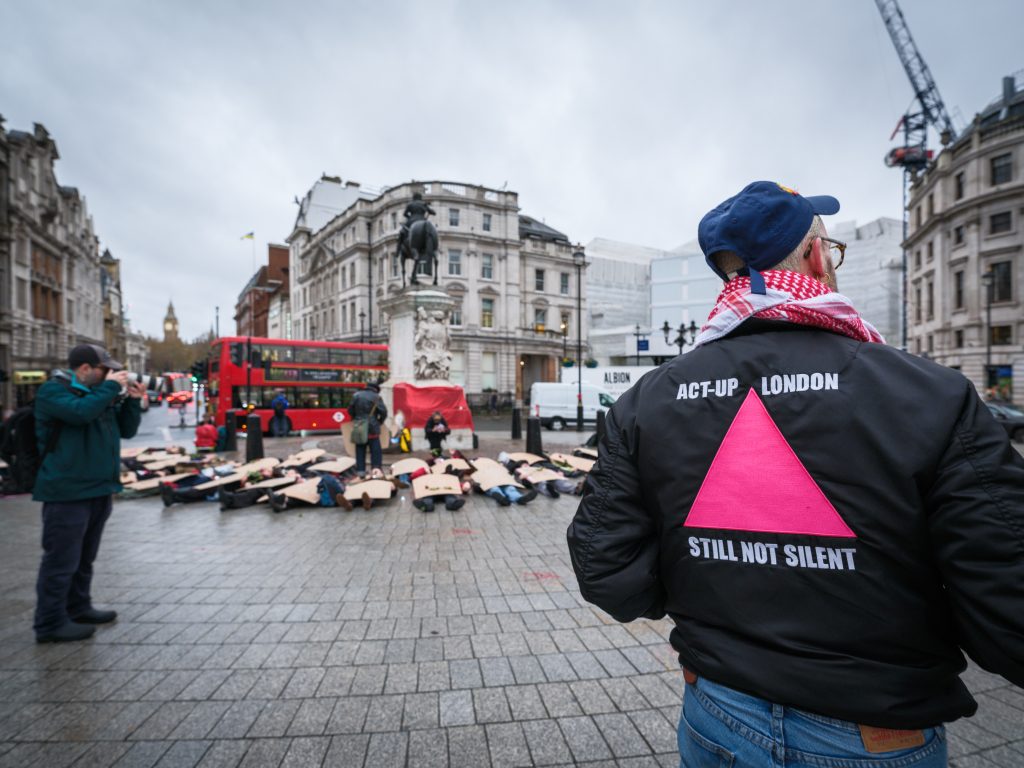
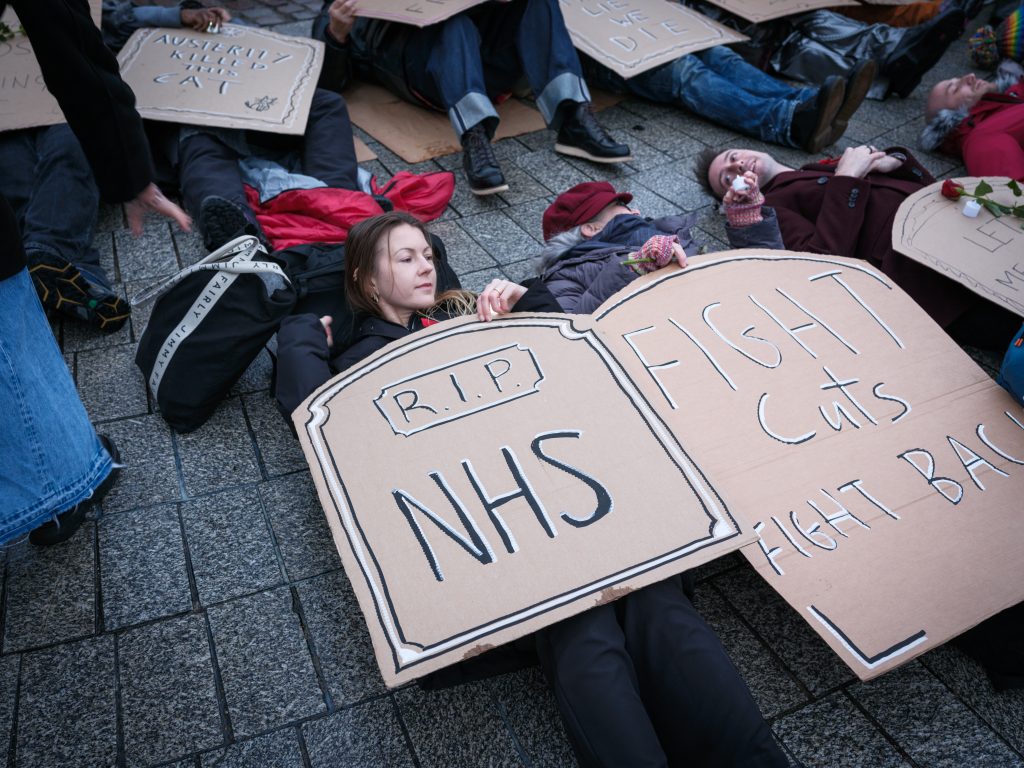
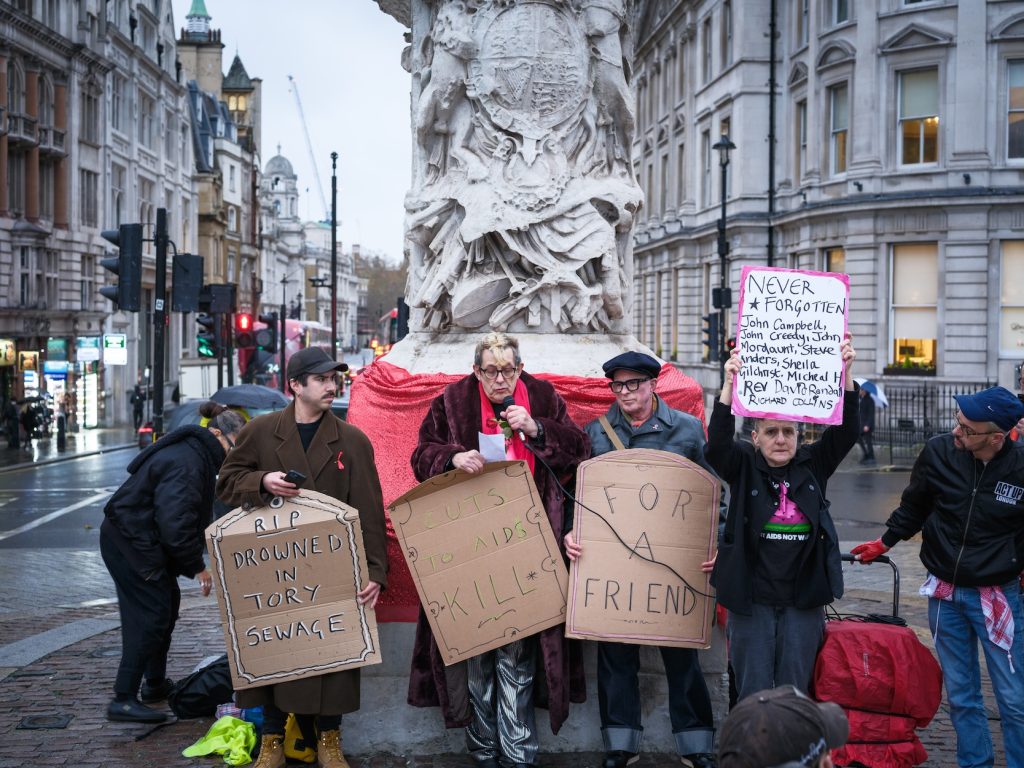
We held a minute’s silence and lay on the ground with large tombstone placards, red roses and candles, to symbolise the millions who have died from AIDS-related illnesses and to condemn the government’s complicity in preventable deaths.
Demanding that the UK Government reverse cuts to HIV treatment and prevention services, over sixty ACT UP London activists let out the chant: “We mourn the dead, we fight as hell for the living!”.
By default, public displays of grief are political: they are an act of fury and sadness for the voices, hugs and kisses of our loved ones who should still be here. This is illustrated by many of those who have existed and worked in HIV/AIDS activist spaces:
“I’m carrying this rage like a blood-filled egg” – David Wojnarowicz, artist, writer and ACT UP activist.
“Affect. Being affected, being moved. Emotion. Motion. Movement, from the post-classical Latin movementum, meaning “motion”, and earlier, movimentum, meaning “emotion” and then later, “rebellion” or “uprising”.” – Deborah B Gould, professor and author of Moving Politics: Emotion and ACT UP’s Fight Against AIDS.
“The HIV crisis is far from over. Our communities continue to face profound barriers – from stigma to a Labour government that has chosen to prioritise death, destruction, and genocide instead of investing in life-saving healthcare access. We must keep fighting to ensure that people living with HIV are never forgotten. ACT UP! FIGHT BACK! FIGHT AIDS!” Marshall Savage, activist as part of the resurgence movement in London.
Political funerals and die-ins have always been key weapons in our arsenal, and strike a chord throughout popular culture: whether reenacted in Robin Campillo’s 120 BPM, which portrays the activism of Act Up-Paris in the 1990s, or featuring in Bishopsgate Institute’s photographs from the 1989 die-in against the The Telegraph for its misrepresentation of HIV/AIDS and those who live with it. Writing for the Guardian, Sarah Schulman (author, playwright, filmmaker and activist) described AIDS activism as “one of the most successful social movements in recent history”.
Forty years on from the beginning of the AIDS epidemic, we must continue combatting the deathly silence of government inaction, stigma and pharmaceutical greed. We thought ‘die-ins’ were history. We thought that era of people dying while waiting for justice was over. We were wrong.
We are living under a weak-willed government that has gutted the HIV voluntary sector. They’ve slashed foreign aid, diverting life-saving funds into military contracts – including £2 billion for Elbit Systems, Israel’s largest arms manufacturer. In the context of Gaza’s genocide, it feels more important than ever to repeat the call to Fund Healthcare Not Warfare.
What you can do:
Because nostalgia is a luxury we cannot yet afford.
Dan is an activist, writer and organiser. He re-formed ACT UP London, contributing to the successful campaign for PrEP access in the UK and building international healthcare solidarity networks. He is the founder of Queer Tours of London, Bender Defenders and This Is My Culture. Dan is also the author of United Queerdom and Queer Footprints.